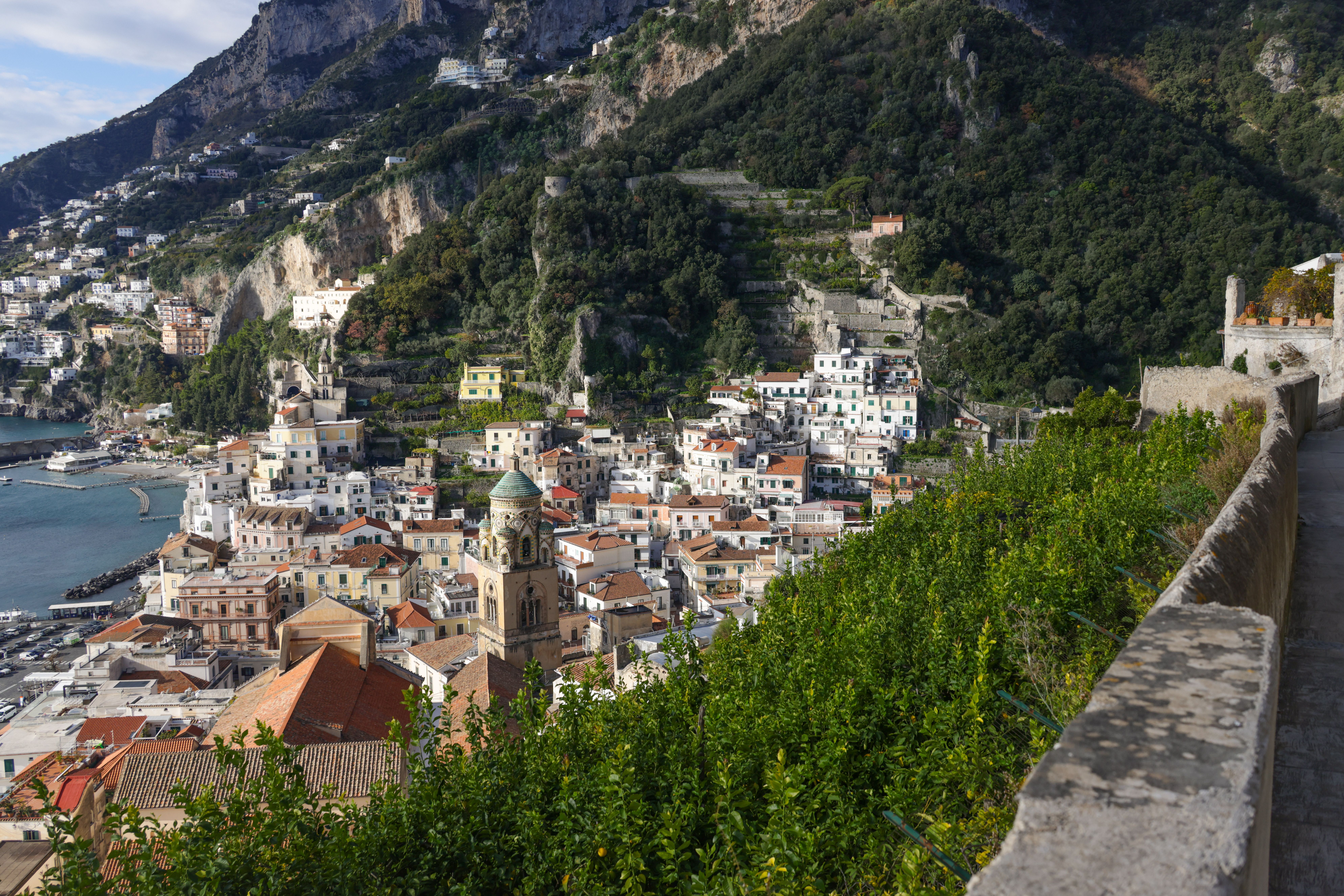
In Ravello, high above the Amalfi Coast, the history of the building now known as Caruso starts with five rented rooms. In 1893, Pantaleone Caruso and his wife Emilia Cicalese opened the Pensione Belvedere in a wing of the D'Afflitto palace, an 11th-century residence at Piazza San Giovanni del Toro 2.
The story is retold in a book by Emilia Filocamo, presented on Luciano Pignataro's Campania food and wine journal, which draws on family memory and local history to reconstruct Caruso as innkeeper, vineyard owner and local entrepreneur.
From garden work to hospitality
According to the account, Caruso worked as a child with gardener Luigi Cicalese and later travelled to Britain with Nevile Reid. That period exposed him to English household customs and ideas of service, experience he later applied to his own hospitality business back in Ravello.
With Emilia Cicalese, he started modestly: five rooms, home cooking and homemade wine, offered from a dramatic position overlooking the coast. The early appeal of the house, as described in the sources, combined lodging, local food, wine from Caruso's own vineyard and the setting itself.
As demand grew, the small pension expanded. What had begun in one wing eventually occupied more of the palace, and the Caruso name became attached to the whole property.
Wine and Ravello Rosa
Caruso was not only an innkeeper. He already owned a vineyard and produced wine, and the article credits him with creating Ravello Rosa, a wine described by its colour, associated with the sunsets over Ravello.
The acquired sources do not preserve the exact recipe, ingredients or production history of that wine. What remains clear is its role in the story: wine was part of the identity of the house, alongside food and hospitality, rather than an accessory to it.
An international reputation
The Belvedere's reputation travelled beyond Campania at an early date. The article cites a 1911 account in the New York Evening Post based on an earlier travel report, while a hotel history notes international attention after a 1903 New York Times article.
The original texts were not independently examined for this article, but the secondary sources agree on the direction of events: a small family pension in Ravello was being noticed by foreign travellers within a decade of its opening.
A royal visit in 1926
One dated episode survives in the family and hotel memory: the visit of Umberto of Savoy on 15 May 1926. Menus commemorating the occasion are reported to survive, marking the day the heir to the throne came to the Belvedere.
It is a useful fixed point in a history otherwise told largely through recollection. By the mid-1920s, the five-room enterprise of 1893 had become an establishment capable of receiving royalty.
What remains today
The historic Belvedere restaurant was launched in 1893 by Pantaleone Caruso and has been renamed Ristorante Il Pantaleone in his honour, according to Belmond, the present operator. The name maintains a direct link between the founder and the hotel's contemporary culinary programme.
Visitors looking for Caruso's Ravello today will find it at the same address: Piazza San Giovanni del Toro 2, Ravello. The building has changed in scale and comfort since the days of five rented rooms, but the continuity of place is documented: Belmond identifies the original pension as having opened in a wing of the palace that forms today's hotel.
Two details are worth keeping in mind when reading the older accounts. First, the story comes down through journalism and family memory rather than a complete archival biography, so dates and anecdotes should be read as transmitted history. Second, the bibliographic details and publication date of Filocamo's book are not established in the available sources, nor are the full production records for Ravello Rosa.
What is established is the outline: a Ravello innkeeper and vineyard owner, his wife as partner in the enterprise, five rooms in 1893, local food and wine, steady expansion, early foreign press attention and a lasting name. That is the basis of the legend of Pantaleone Caruso.