A stuffed cuttlefish from Vietri sul Mare borrows the sharp, vinegary character of Salerno's stuffed spleen, the dish tied to the feast of San Matteo. It is not presented as a replacement for that tradition, but as a maritime companion to it.
The recipe is a contemporary creation by Andrea De Simone, gathered from his Vietri family cooking and conceived as a seafood version of the Salerno mevza. That framing matters: the sources describe seppia a mevza as a family "new entry," distinct from the long-established tradition of stuffed spleen.
A dialogue between Vietri and Salerno
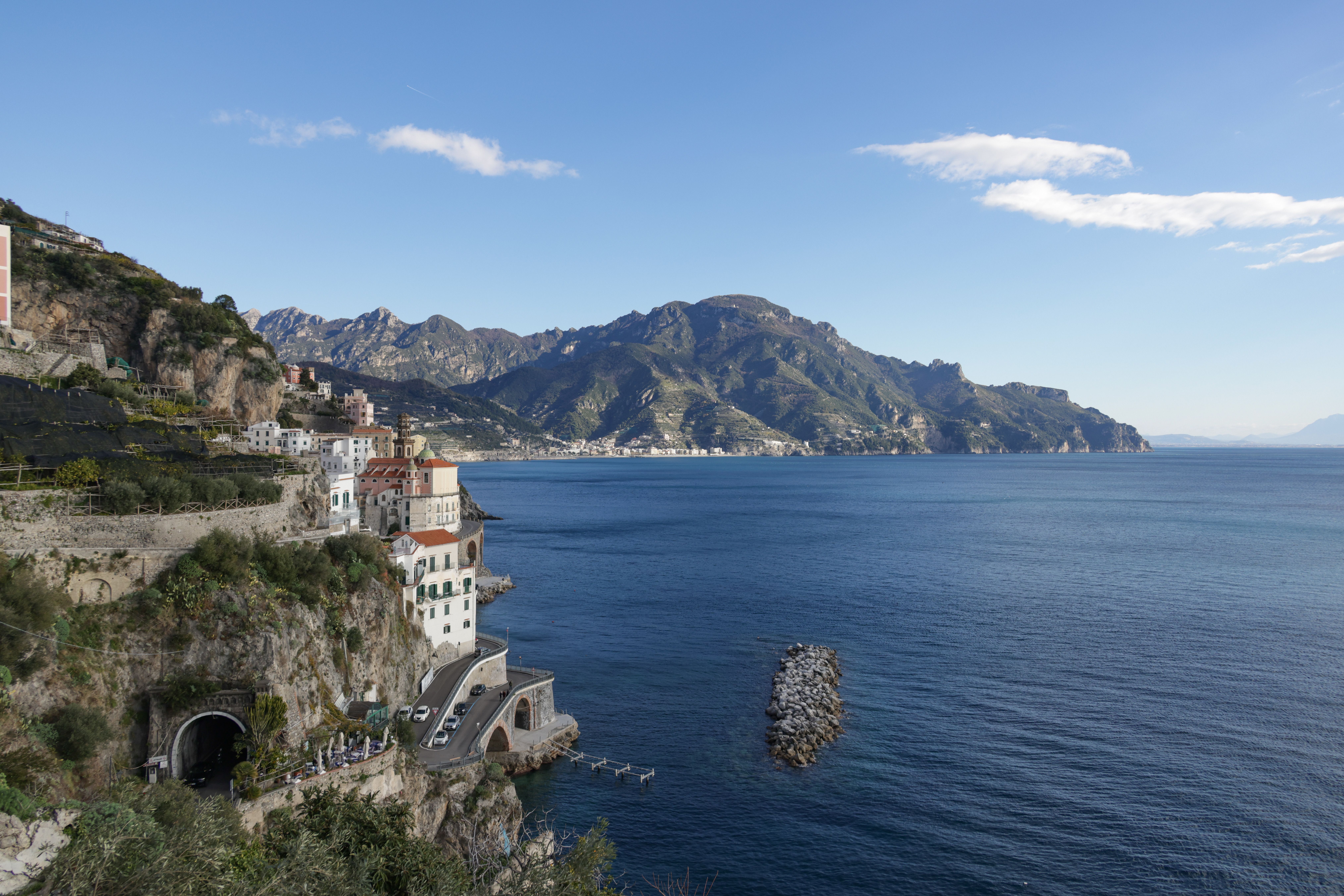
The dish connects two nearby food cultures: the maritime cooking of Vietri sul Mare, at the edge of the Gulf of Salerno, and the domestic and popular cooking of Salerno itself.
The Salerno reference point is the mevza 'mbuttunata, stuffed veal spleen prepared with parsley and vinegar. It is closely associated with the patronal feast of San Matteo and is eaten especially in September. The cuttlefish version takes up that association through flavor rather than through ingredients: parsley, garlic, chili, red wine and red-wine vinegar.
Viewed more broadly, the comparison recalls the wider place of offal and humble foods in southern Italian cooking. Palermo's pane con la milza, made with spleen, lung and trachea and served in bread as popular street food, is one well-known example. The research does not establish a direct historical link between that Palermo specialty and seppia a mevza; it supports only the larger context of poor and popular foods across southern Italy.
How it is made
The preparation calls for medium-large cleaned cuttlefish, stuffed with parsley, garlic, chili pepper and salt. They are browned in extra-virgin olive oil, deglazed with red wine and cooked slowly.
Red-wine vinegar, added halfway through cooking, is identified as the element that brings the preparation closest to the traditional mevza.
For four people, the stated quantities are two cuttlefish of about 400 grams each. The stated times are 20 minutes for preparation and 50 minutes for cooking.
The dish is served cold, but not straight from the refrigerator.
What remains uncertain
The sources do not document a long historical continuity for seppia a mevza. It is best understood as a recent family recipe inspired by an older Salerno dish, not as an old Vietri dish in its own right.
Likewise, explanations for the historical origin of Salerno's mevza, including a possible connection with the Jewish community, are presented as historical hypotheses rather than settled consensus. The available sources also offer no independent evidence about how widely seppia a mevza is now cooked in Vietri homes or restaurants.
Why it is worth knowing
First, it clarifies what seppia a mevza is and is not: a modern stuffed-cuttlefish preparation that deliberately echoes Salerno's feast-day spleen, without claiming the same history.
Second, it places the recipe in a readable southern Italian context. Salerno contributes the direct model — stuffed spleen with parsley and vinegar for San Matteo — while examples such as Palermo's spleen sandwich show how deeply offal and humble ingredients belong to the popular cooking of the South, even where no direct connection exists.