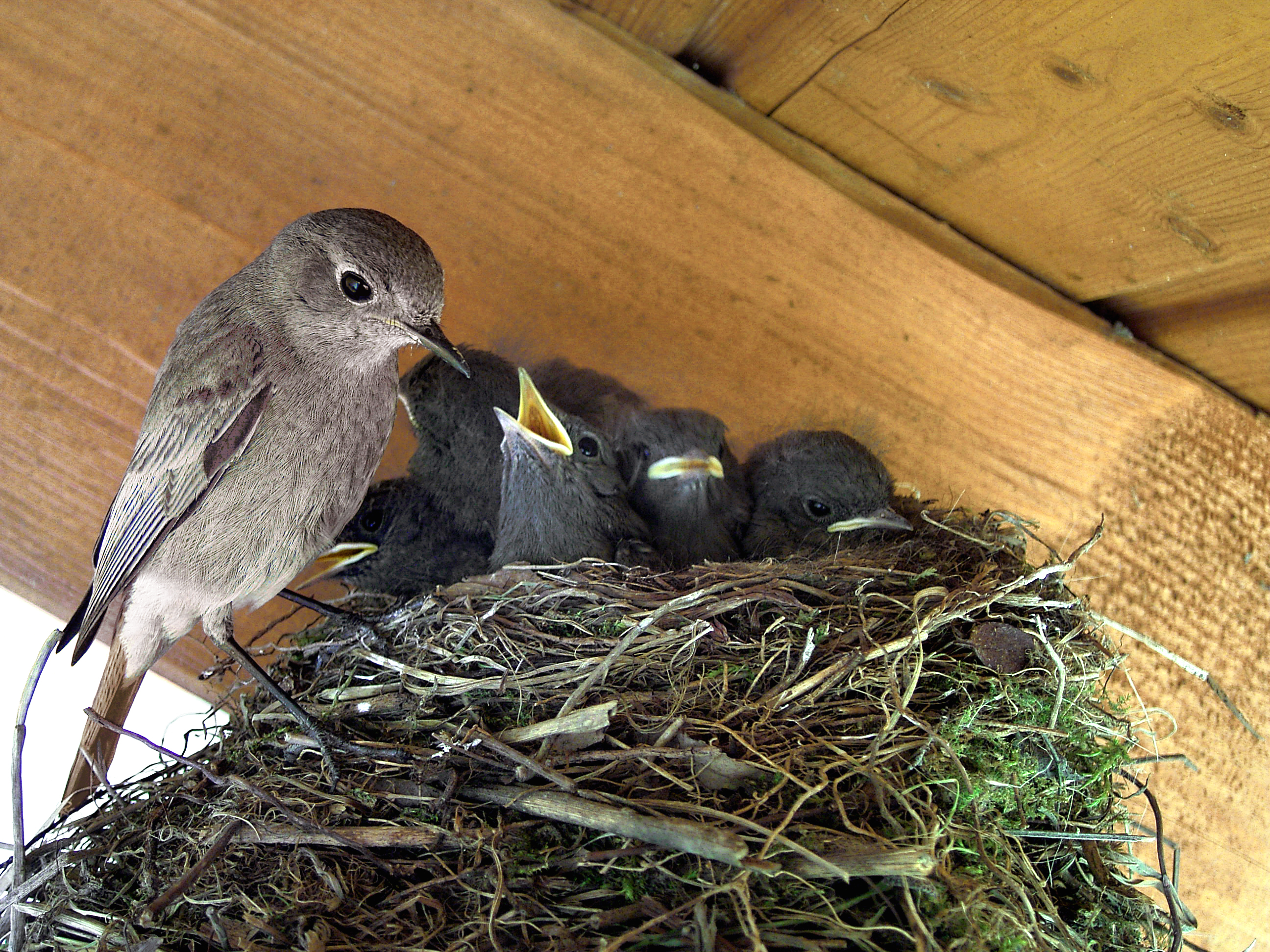
The Codirosso spazzacamino (Phoenicurus ochruros), known in English as the Black Redstart, is regularly observable at the archaeological excavations of Pompeii, according to the Parco Archeologico di Pompei.
The Pompeii account makes the site association specific: at Pompeii, the species prefers archaeological ruins and is especially seen on the roofs of the ruins. That observed preference is consistent with the wider ecology described for the species, which occupies varied open habitats, often but not always with a rocky component.
How to recognize it
The most useful field mark is the tail. The Pompeii source describes the species as recognizable by its brick-red tail and by its habit of displaying itself prominently. Independent identification material describes the same feature as an orange tail, especially visible when the tail is flashed open or during flight.
The Pompeii description distinguishes plumages:
- Males are blackish-grey with a white wing band and brick-red tail.
- Females and first-year birds are brown with the same reddish tail.
The local source compares the bird to a European Robin in size, without giving a metric length or mass.
Why ruins suit it
The breeding habitat described in the Pompeii account includes rocky walls, mountain rock faces, and slopes with rocky debris. Urban equivalents named in the same account include roofs and cornices.
In that context, the ruins at Pompeii can be understood as an observed habitat analogue: stone structures offering elevated, open positions. The research supports this as an observed habitat association at the site; it does not provide a population estimate, long-term trend, or assessment of stability.
Across its range, the species feeds mainly on or near the ground and sings from prominent perches. That combination — ground-level feeding with use of prominent perches — helps explain why a bird of open, often rocky habitats is also at home around roofs and standing walls.
Movement described at the Mediterranean coast
The Pompeii account says that birds arriving on Mediterranean coasts may originate from the Apennines or central-eastern Europe and leave in March for breeding areas.
The available material does not establish whether the birds observed at Pompeii are predominantly winter visitors, passage migrants, or a mixture of both, and it does not give a precise arrival date for the site. The March departure should therefore be read as the timing noted in the local account, not as a complete migration calendar for Pompeii.
Conservation context
BirdLife DataZone treats the species through formal sections covering distribution, ecology, habitat, threats, conservation action, and IUCN assessment. The extracted research text exposes that framework but not the populated assessment values, so no conservation status or trend is stated here.
If you look for it at Pompeii
The Pompeii account points visitors toward one place first: the rooftops and upper lines of the ruins. Scanning roof edges and other prominent, open perches is the approach most directly suggested by the sources.
A second practical cue is the tail. Because females and young birds are brown overall, they are easier to overlook, but the shared reddish tail remains the connecting feature. Watching for a tail flashed open or seen in flight can therefore help separate a Black Redstart from other small brown birds around the excavations.