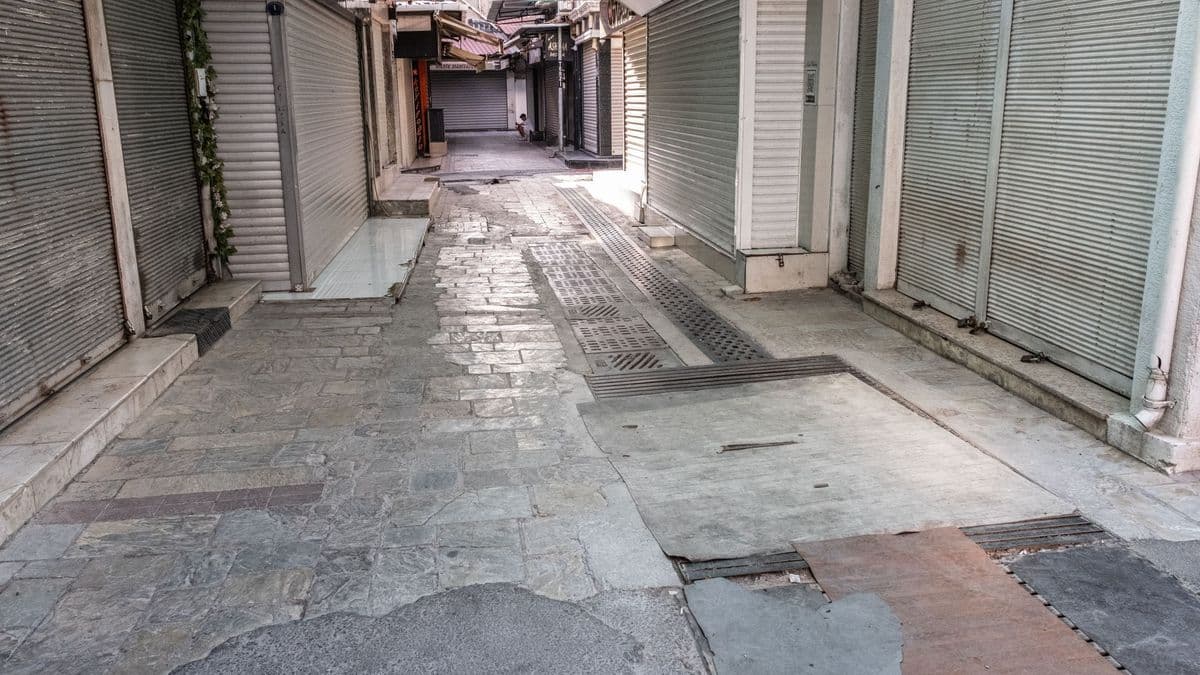
Confcommercio Campania says about 23,000 shops closed in the ten years to November 2026, nearly one-fifth of the total. The figures were presented at the association's annual assembly, according to La Repubblica and Metropolis Web.
Neighbourhood food retail recorded the steepest decline, with closures exceeding 50% over the decade. More than half of that segment's shops disappeared, according to the Campania figures cited by Confcommercio.
The closures affect a sector that Confcommercio describes as central to the regional economy. ANSA reports that the tertiary sector generates 76.7% of Campania's regional added value.
That economic weight has not protected traders from pressure on margins. According to ANSA, inflation, energy costs, transport strikes and weak foreign-tourist spending were eroding the margins of two-thirds of businesses.
Employment data points in the same direction. In the first half of 2026, employment in commerce and tourism fell by 1.8%, while use of the wage-support system increased by 3.9%, according to ANSA.
Confcommercio has criticised the regional funding allocation under the "Campania Investe" programme. The association said €30 million of €346 million was reserved for craft businesses and neighbourhood commerce.
Confcommercio also announced Federeventi, a federation intended to coordinate trade associations. According to Metropolis Web, it is meant to create a distributed programme of cultural, food-and-wine and commercial activities ahead of the America's Cup planned for May 2027.
Confcommercio has not announced the federation's legal structure, governance or operating timetable. Its effect on individual businesses remains prospective.
The Campania figures fit a national pattern described by Confcommercio. Its national analysis links the decline of neighbourhood retail to weak consumption, changing spending habits and online commerce, and warns that contraction may continue without targeted policies.
In 2025, Confcommercio reported more than 320,000 active tertiary-sector businesses in Campania. It also identified shortages of at least 20,000 specialised workers.