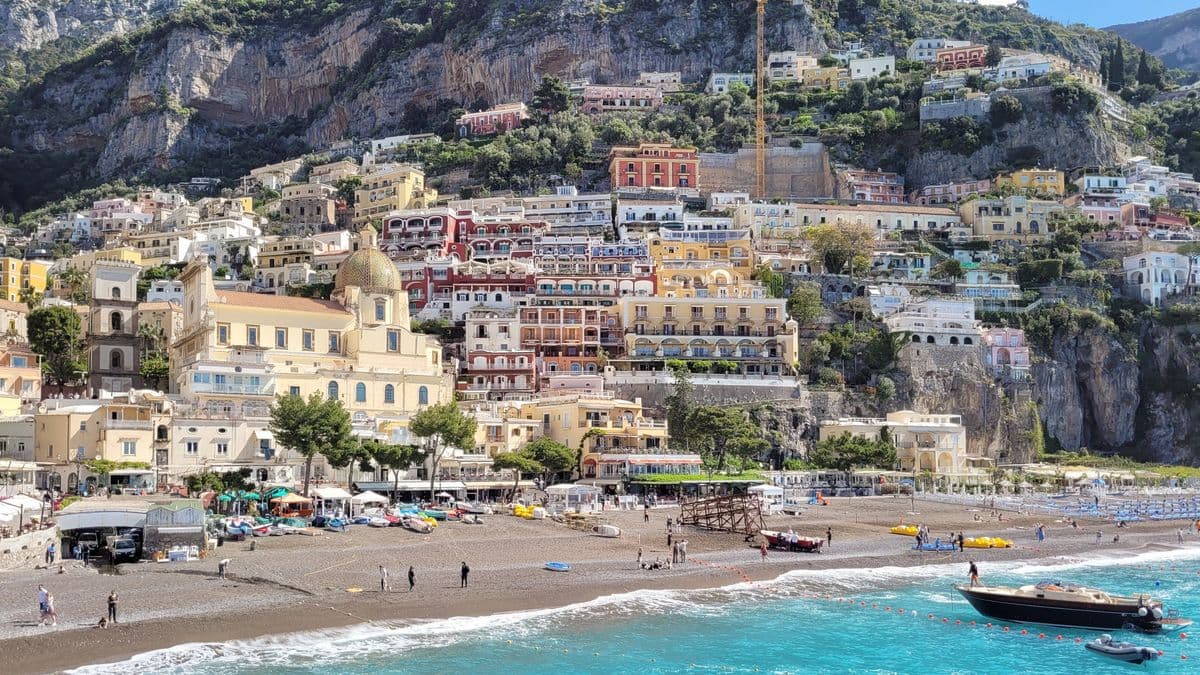
Positano’s Roman archaeological museum lies beneath the churchyard of Santa Maria Assunta and preserves part of a luxurious seaside villa, according to Positano News. The underground rooms retain first-century AD frescoes, mosaics and Roman structures.
The municipality dates the villa broadly between the first century BC and the first century AD. Its triclinium is decorated in the Fourth Pompeian Style, with well-preserved painted decoration.
The villa was buried by ash and pumice during the AD 79 eruption of Vesuvius, according to the municipality. Substantial portions remain underground and unexcavated.
The museum route connects the Roman remains with later crypts beneath the church. The visit passes through Roman rooms and later underground spaces in a guided tour lasting about 30 minutes.
Alongside the Roman layer, the complex preserves medieval and ecclesiastical remains. The former municipal archaeological account describes a sequence of architectural layers spanning roughly two thousand years beneath Santa Maria Assunta.
The medieval crypt retains only a small painted fragment, described by Positano News as showing part of a shoulder and a hand, probably belonging to a saint. The exact date and authorship of that fragment still require specialist confirmation.
The underground hypogeum was once used for religious functions and later adapted for burial, according to the former municipal account. Its architectural changes and later funerary use illustrate the site’s long stratification.
The proposed identification of the villa’s owner as Posides Claudi Caesaris remains a historical theory rather than an established fact. The precise original function and date of every underground chamber are also not fully settled because the complex was repeatedly modified.
Visitors should check ticket prices, opening hours and tour capacity with the museum before planning a visit.