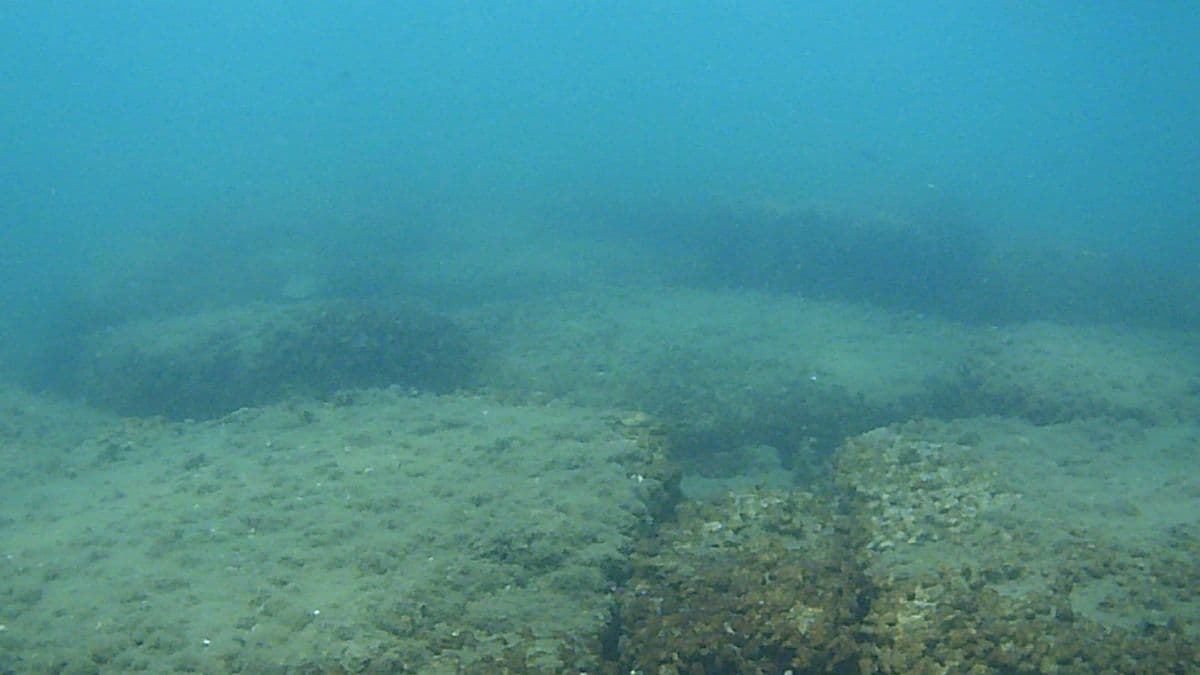
The Baia Underwater Archaeological Park served as a real-world testing site for the European NERITES research project, according to Il Mattino and Italy's underwater heritage authorities.
The campaign focused on systematic, remote and non-destructive monitoring of submerged archaeological heritage. From 30 August to 6 September 2026, researchers installed, tested and demonstrated NERITES technology in Baia, according to the Soprintendenza Nazionale per il Patrimonio Culturale Subacqueo.
The first operational pilot took place at the Villa dei Pisoni between 31 August and 5 September 2026, according to the National Research Council (CNR). The broader dates reported for the Baia activities cover the full institutional campaign around that pilot.
The technology tested included autonomous underwater vehicles, optical and acoustic sensors, and underwater monitoring stations, according to Il Mattino. The CNR said the pilot also used a docking station, a surface buoy, a remote monitoring centre, 3D imaging, and LIBS and QCL sensors.
The system combines autonomous navigation, precision positioning, imaging, 3D surveying and remote control to study and protect submerged Roman structures, according to the CNR. The aim is to make monitoring of underwater heritage more systematic, quantitative, repeatable and non-invasive, and potentially predictive.
Baia was chosen because it is a demanding test environment. Mosaics, masonry, colonnaded areas and different construction materials are exposed to changing environmental conditions and human pressures, according to the CNR and the Soprintendenza.
The Soprintendenza Nazionale per il Patrimonio Culturale Subacqueo is a project partner and the institutional reference for activities carried out at Baia. NERITES is funded by Horizon Europe under Grant Agreement No. 101132575 and runs from January 2024 to December 2026, according to the CNR.
The campaign data were still undergoing post-processing and comparison with archaeological and environmental baselines, the CNR said. Quantified performance results, detection thresholds and a completed degradation assessment have not been released.