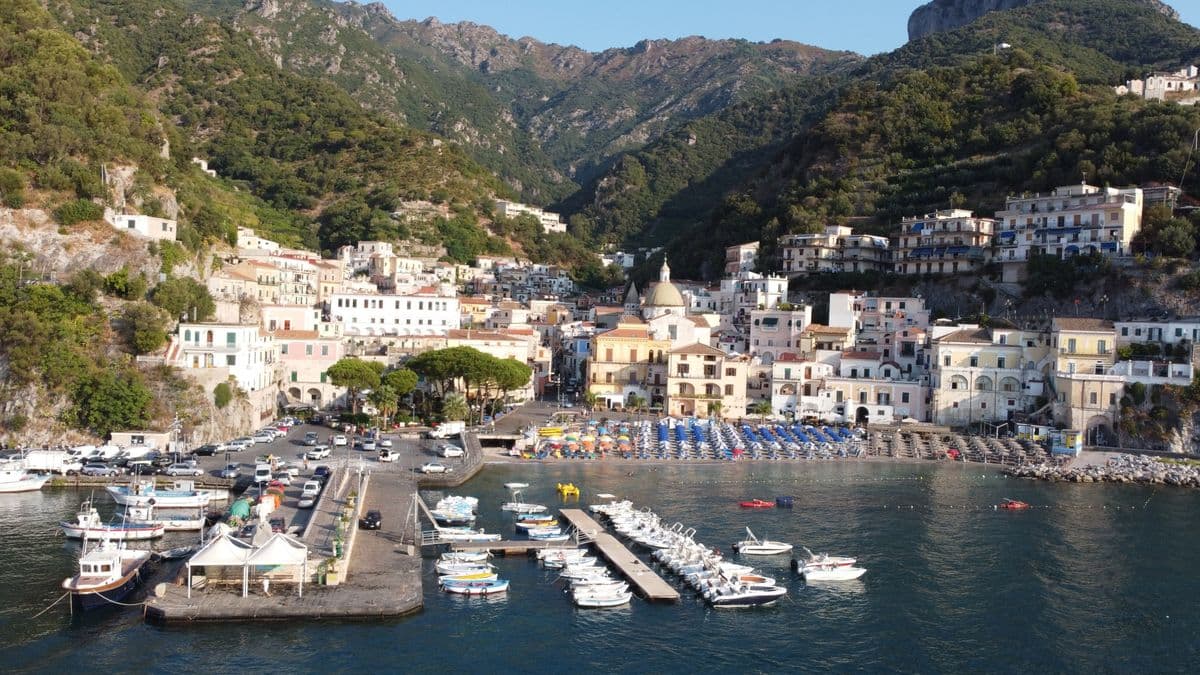
Cetara is again at the centre of a dispute over possible red-tuna fattening cages offshore, with environmental protection on one side and the local tuna supply chain on the other. According to Positano News, what is currently reported as authorized is an oceanographic buoy, not confirmed cages.
The discussion revives a conflict associated with similar cages reportedly removed from the area about twenty years ago, according to local press accounts. VesuvioLive reports that the return of the proposal has reopened concerns along a coastline already under pressure from tourism, fishing and coastal activity.
At issue is what Mediterranean tuna “farming” means in practice. According to Greenpeace, it generally involves catching wild tuna and transferring the fish to cages for fattening, rather than breeding fish in captivity.
That distinction matters for Cetara because the town is linked to the wider Salerno tuna-fishing and processing chain. Greenpeace reports that this existing chain is one reason the area has been discussed as a possible location for a fattening facility.
Critics identify possible impacts including accumulation of organic waste, alteration of seabed conditions, effects on biodiversity and risks to the wider interconnected coastal ecosystem. Greenpeace’s 2025 report says intensive tuna-fattening cages can concentrate biomass and organic waste, alter seabed conditions and threaten biodiversity.
Supporters present a different case. According to local reporting, backers point to potential benefits involving traceability, technological controls, competitiveness and employment in the tuna supply chain.
Planning references do not settle the question. ISPRA states that the 2023 Atlante AZA Campania identifies potentially suitable marine areas for farming sea bass, sea bream, tuna and shellfish. Inclusion of tuna-related areas in that suitability study does not by itself prove that a specific Cetara facility has been approved.
The regulatory picture remains uncertain. Greenpeace reports broader Italian weaknesses in transparency, monitoring and environmental regulation for intensive tuna-fattening facilities.
It remains unconfirmed whether the proposal discussed in 2026 is the same project described in earlier reporting or a new application. The operator, exact coordinates, number of cages, biomass capacity, feed regime and operating timetable have not been publicly confirmed, and no final concession or completed environmental-impact assessment for a specific Cetara proposal has been announced. The environmental effects described by critics remain potential or general risks; site-specific measurements for Cetara have not been publicly released.