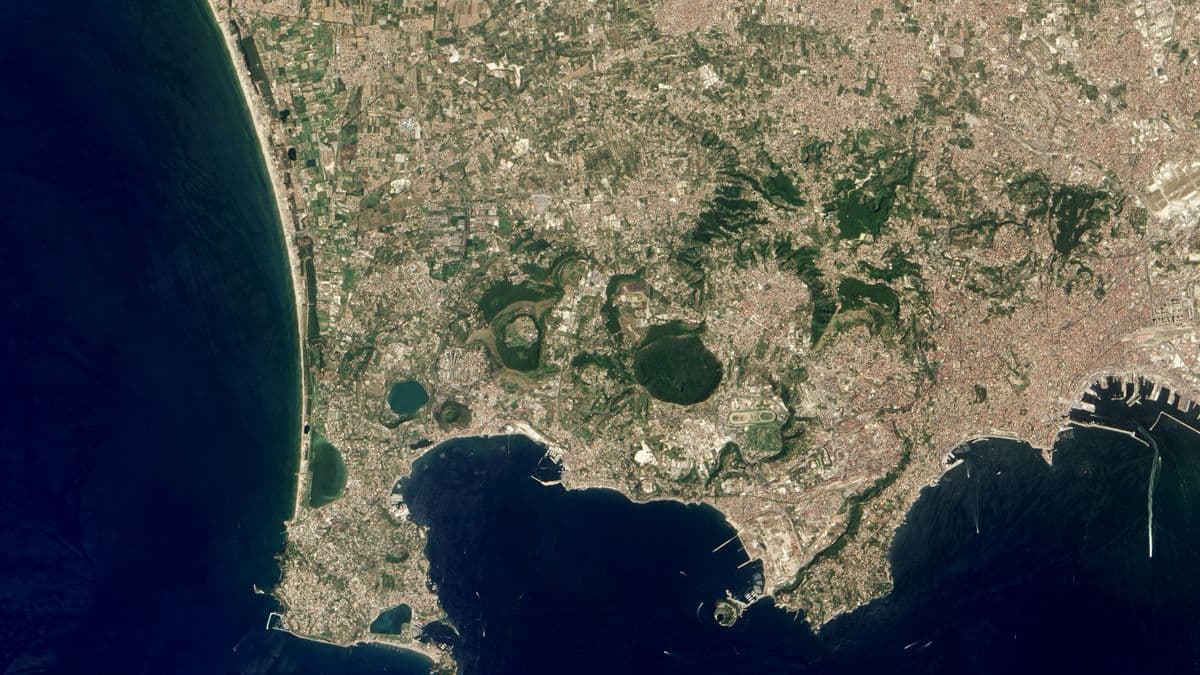
A new extraordinary plan for the Campi Flegrei has entered into force, with Campania Region president Roberto Fico describing the measure as the product of institutional cooperation.
Decree-Law No. 205 of 11 November 2026, titled "Piano straordinario per i Campi Flegrei," entered into force on 12 November 2026. The decree creates a ten-year special commissioner structure led by the president of the Campania Region, with Fico appointed extraordinary commissioner through 31 December 2036.
The plan provides approximately 1 billion euros over ten years, divided into two 500-million-euro funds. One fund is directed at private buildings; the other covers public assets, infrastructure, and essential services. Annual allocations of 50 million euros per fund are planned under that ten-year framework.
What the decree provides
For households, the measures include grants of up to 30,000 euros for urgent restoration work or lightly damaged homes, for qualifying applicants. Additional support is provided for reducing seismic vulnerability, subject to the decree's eligibility criteria.
The decree also includes suspensions of tax and contribution payments, mortgage-payment relief through 31 December 2027 for specified categories, and accelerated procedures for pending building regularization cases. Voluntary relocation outside the risk area is included among the available measures, subject to the decree's criteria.
Support staffing is attached to the commissioner structure to administer the plan over the ten-year period.
Next step: conversion into law
As a decree-law, the measure must be converted into law by Parliament within 60 days of publication. That means the final scope of the measures may still change during parliamentary examination.
Residents, property owners, and businesses should therefore consult the implementing rules and subsequent administrative notices for precise application procedures, deadlines, and eligibility requirements. The research sources do not establish how quickly individual households will receive funding or complete restoration work.
What to watch
Two practical questions will shape how the plan is received. The first is timing: when application channels open and how restoration grants, mortgage relief, and tax suspensions are administered in practice. The second is local implementation: the sources report differing levels of concern about whether the new commissioner structure gives municipalities sufficient authority and whether support for local businesses is adequate.
For now, the framework is set: a ten-year commissioner structure, about 1 billion euros in planned resources, and a set of immediate relief and restoration tools. The parliamentary conversion process will determine what, if anything, changes before the plan becomes final.