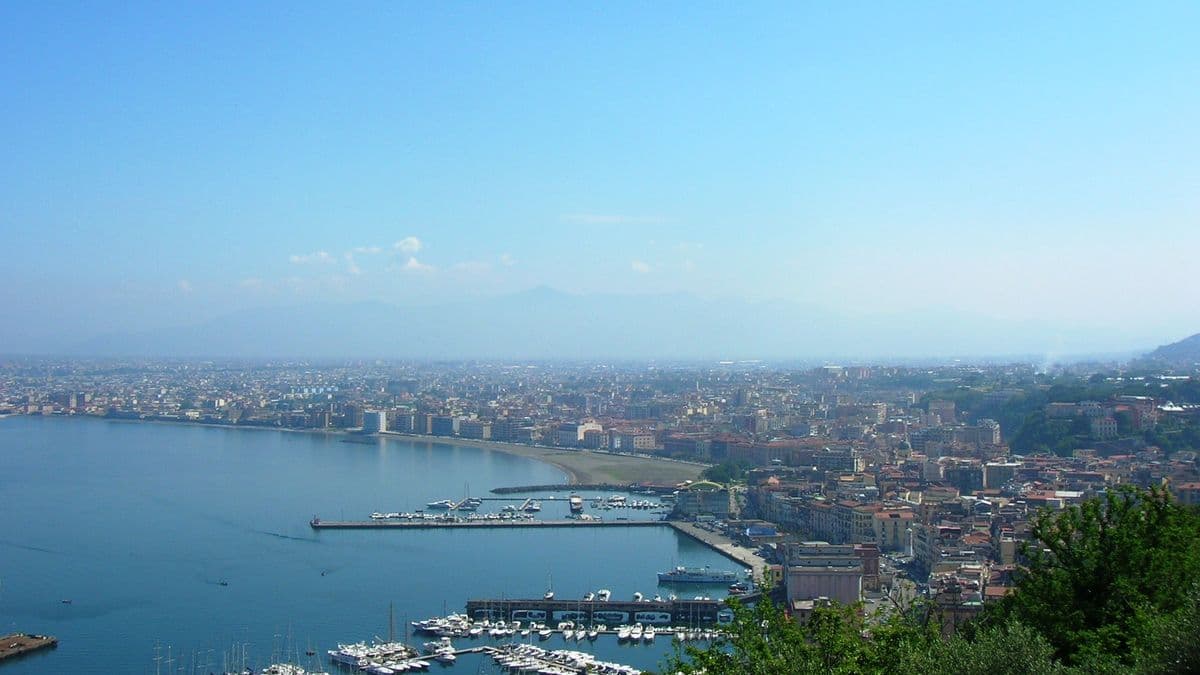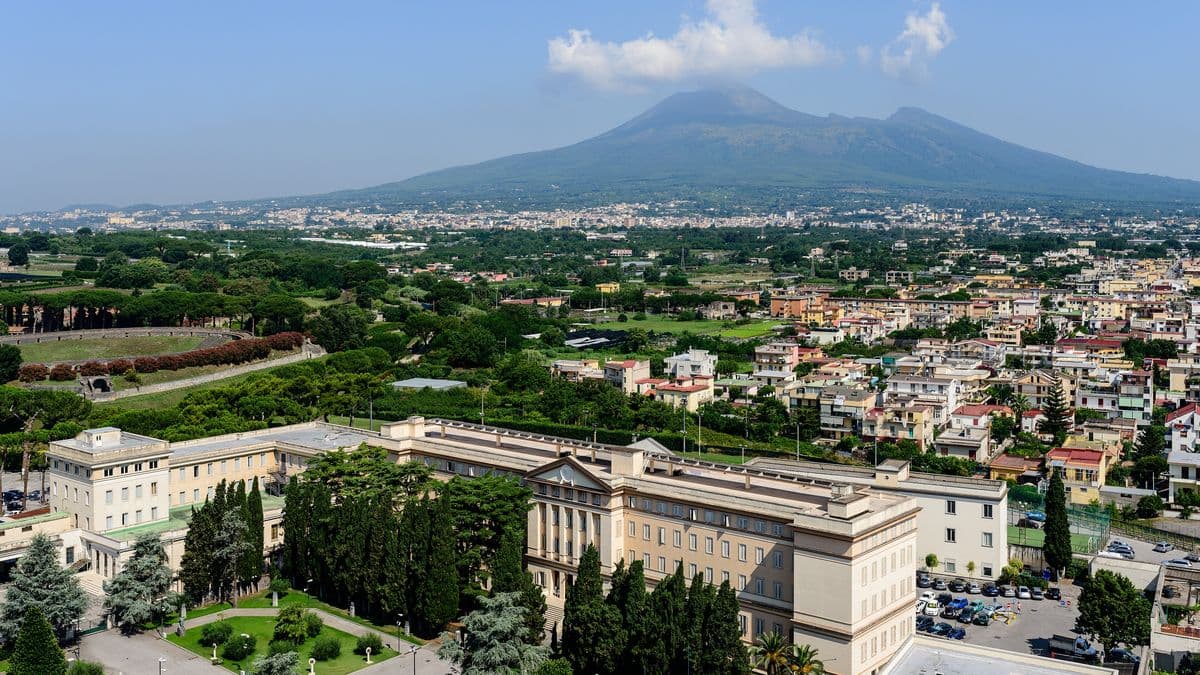
A new study of the Campi Flegrei has revised the reconstruction of the Tufo Giallo Napoletano eruption, the major event that helped shape the geological setting on which Naples stands.
The eruption is dated to approximately 13,980 years ago, with an uncertainty of about 140 years. It is one of the defining episodes in the recent eruptive history of the Campi Flegrei caldera, centred approximately at 40.827°N, 14.139°E, west of Naples.
According to summaries published by the Istituto Nazionale di Geofisica e Vulcanologia (INGV), ANSA, MeteoWeb and Metropolis Web, researchers integrated new stratigraphic and geochemical data with earlier research across an area of roughly 80 kilometres. The result is a new reconstruction of both the eruption and its volcanic feeding system.
Three revisions stand out.
First, the estimated size is smaller. The study places the erupted magma volume at 16–20 cubic kilometres, described in the sources as less than half of earlier estimates.
Second, the eruption was less extensive but more complex than previously thought. Rather than a simpler single-chamber event, it was supplied by at least four distinct reservoirs that emptied progressively.
Third, the eruption is presented as a sequence of impulses supplied by those distinct magma reservoirs. That pulsed behaviour, rather than one continuous discharge, is central to the revised interpretation.
The deposits left by the eruption helped form the ground beneath Naples. Over the centuries, the resulting yellow tuff also became a practical building resource, later used as workable stone for aqueducts, fortifications and buildings.
For readers in Naples and Campania, that connection remains visible in the city’s older fabric: the same volcanic material that records a major Campi Flegrei eruption also provided stone for everyday urban construction.
The researchers say the revised reconstruction can improve volcanic-hazard scenarios by offering a more detailed model of how such an eruption developed. At the same time, they caution that the Tufo Giallo event is not necessarily representative of future eruptions.
That distinction matters. The study refines understanding of a past eruption; the acquired sources do not establish that it changes the current official alert level or immediate hazard assessment. Its value is principally for longer-term interpretation and scenario modelling.
Some details remain limited in the publicly available summaries. The full methodology, datasets and peer-review details of the underlying research paper were not directly reported, and the exact baseline behind the “less than half” comparison for magma volume is not specified. The date is given both as about 14,000 years ago and more precisely as 13,980 years ago, an apparent rounding difference.
Even with those limits, the direction of the revision is clear: a smaller, more fragmented magma system, a more complex eruption sequence, and a closer link between Campi Flegrei volcanism and the physical city of Naples.