Archaeologists have uncovered a substantial rectangular structure outside the ancient walls of Abellinum, in Contrada Civita di Atripalda, according to ANSA.
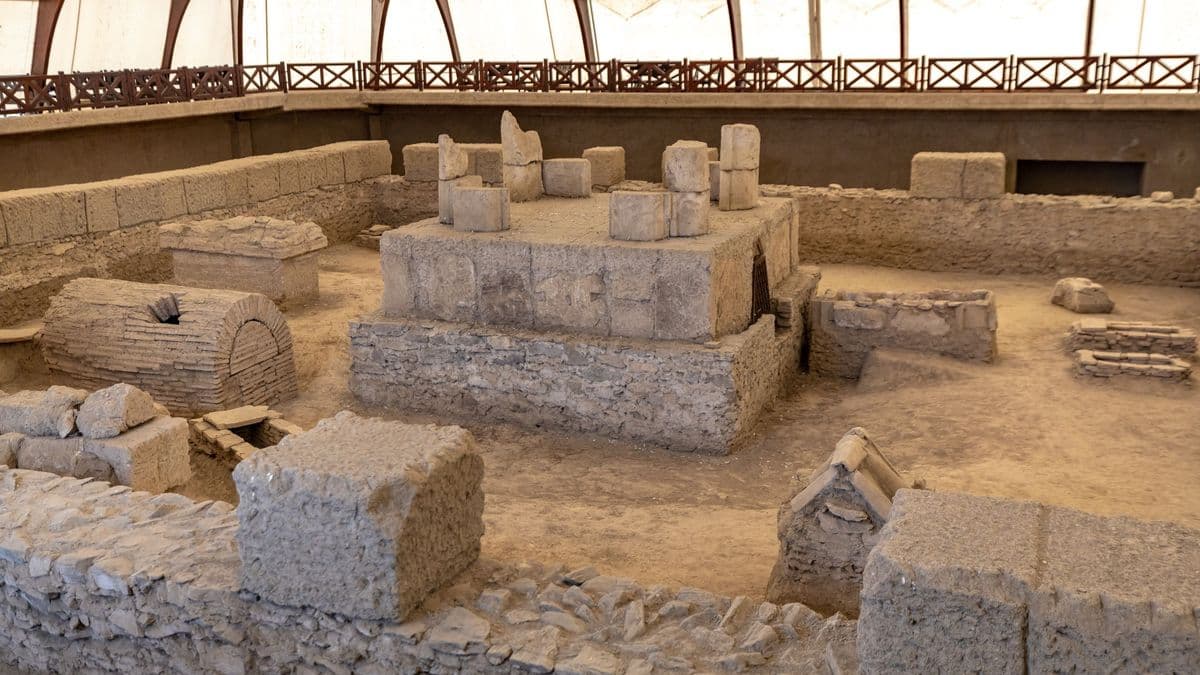
The structure is built from yellow and grey tuff blocks and measures approximately 3.50 by 5 metres. It appears to be the base of a more complex monument dating to the height of the Roman Imperial period.
The remains include finely worked capitals and columns. Its position along a major road leaving the ancient city suggests a commemorative or funerary monument, although that interpretation remains provisional and based on its location.
The Soprintendenza and the Municipality of Atripalda intend to coordinate protection and further investigation using preventive-archaeology techniques. The full extent, elevation and surviving decoration of the monument have not yet been established, and no more precise construction date has been reported.
The find adds to the known archaeological area of Abellinum, which developed on the Civita plateau, on the left bank of the Sabato River, over an earlier Samnite settlement, according to the Ministry of Culture. The ministry describes Abellinum as a Roman colony established in the late 2nd century BCE over that earlier settlement.
The surrounding archaeological area includes Roman walls, public buildings, baths, a forum and a Hellenistic-Pompeian-style domus. Research at Abellinum combines field surveys, stratigraphic excavation, geophysical prospection, photogrammetry, TLS and GIS systems, according to the University of Salerno project studying the site.